Choosing new cabinet hardware is one of the most satisfying home upgrades you can make — and one of the most confusing, if you're not sure what the measurements mean.
Total length. Hole centres. Projection. Thread size. If you've found yourself staring at a product listing wondering what any of this actually refers to, you're not alone. It's one of the questions we get asked most at Barn & Brass, and the good news is it's much simpler than it looks once someone explains it properly.
This guide covers everything you need to know to measure up accurately, choose the right size for your cabinets and drawers, and order with confidence the first time.
Understanding the Key Measurements
Before you grab a tape measure, it helps to understand the terms you'll see on most product listings.
Hole Centres (the most important measurement)
Also written as "centre to centre" or abbreviated to "c/c" or "ctc" — this is the distance between the two screw holes that fix a bar handle or pull to your cabinet door or drawer front. It's measured from the centre of one hole to the centre of the other.
This is the measurement that has to be right. If you're replacing existing hardware, your new handles must have the same hole centre distance as your old ones — otherwise you'll need to drill new holes, which means filling and repainting the old ones first.
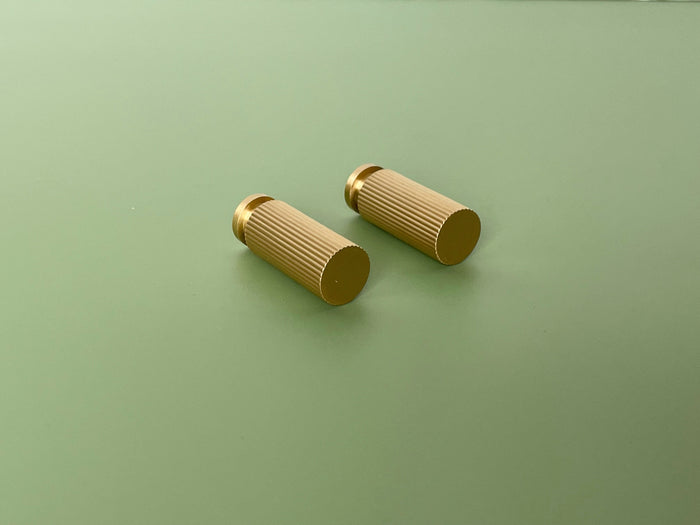
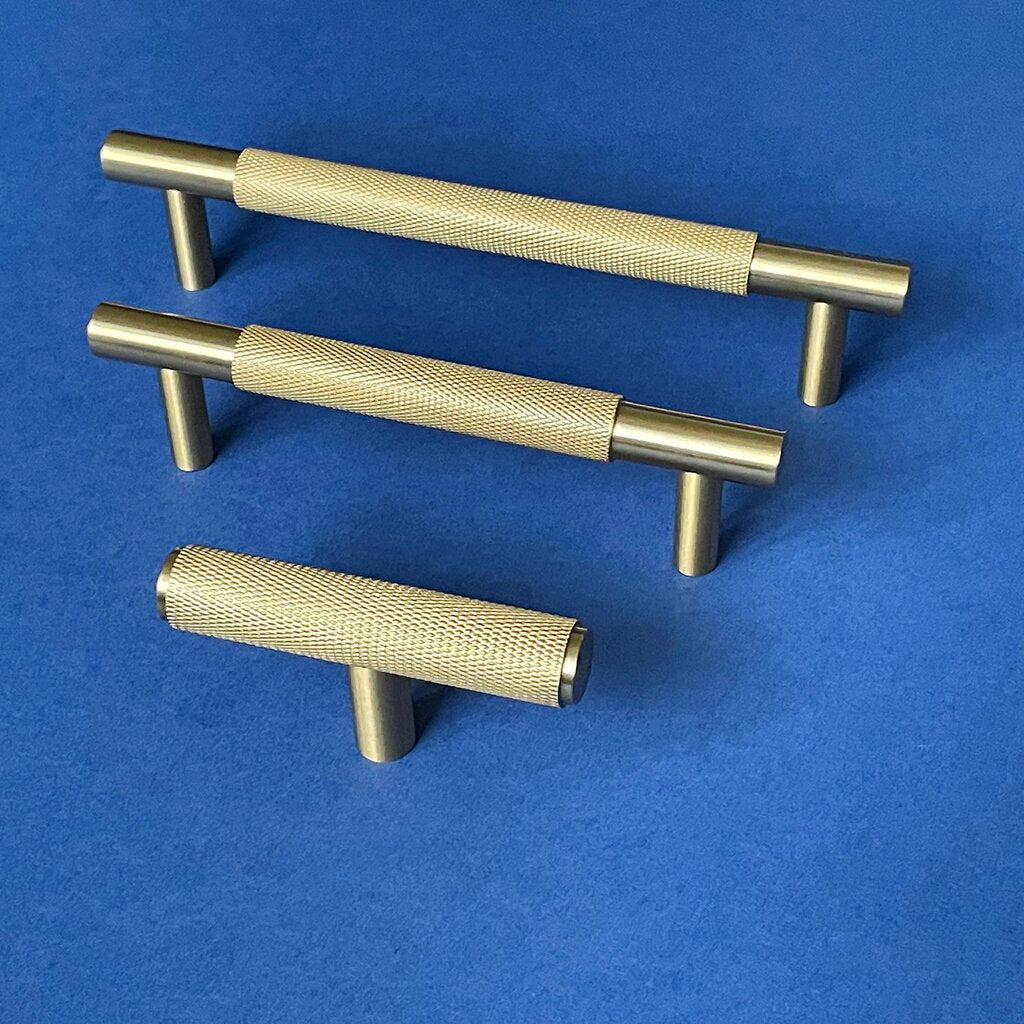
Standard hole centre distances you'll commonly encounter are 96mm and 128mm, though handles are available in many sizes. Our BJØRG Knurled Brass Cabinet Handle is available in both 96mm and 128mm hole centres, as well as a standalone knob version — making it easy to mix and match across your kitchen.
Overall Length
This is the full length of the handle from end to end, including any decorative tips or end caps. It will always be longer than the hole centre measurement. A handle with 96mm hole centres might have an overall length of 124mm — those extra 14mm (7mm each side) account for the handle beyond the fixing holes.
When a listing states "124mm length (96mm hole centres)", it means: overall length = 124mm, distance between the screws = 96mm.
Projection (or Depth)
Projection is how far the handle sticks out from the cabinet surface when fitted. A handle with a generous projection is easier to grip, while a low-profile pull sits closer to the door for a sleeker look. Our BJØRG knob has a depth of 32mm — satisfying and substantial without protruding too far.
Thread Size
For knobs, thread size refers to the screw thread used to fix the piece. All Barn & Brass hardware uses M4 metric thread — the standard for cabinet hardware in the UK. Every piece ships with fixings and a drilling template, so you won't need to source screws separately.

How to Measure Your Existing Hardware
If you're replacing handles that are already fitted, measuring is straightforward.
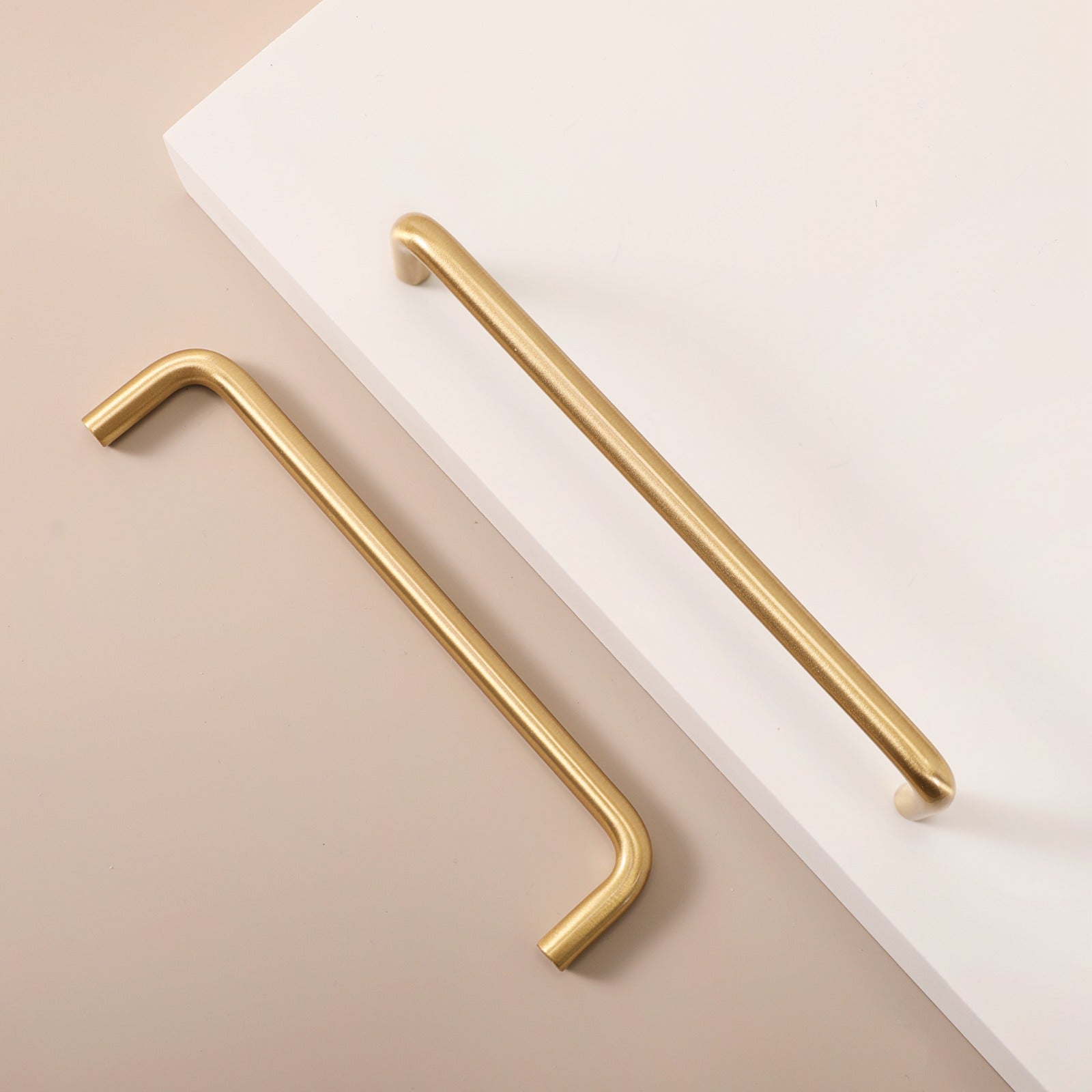
For bar handles and pulls: Take a ruler or tape measure and measure from the centre of one screw hole to the centre of the other. That number is your hole centre distance — and it's the figure to match when you shop. Most standard handles have 96mm or 128mm hole centres, so if your measurement falls close to one of those, that's almost certainly the correct size.
For knobs: A single screw through a single hole — no hole centre distance to worry about. All Barn & Brass knobs use M4 metric thread, and fixings are included with every order.
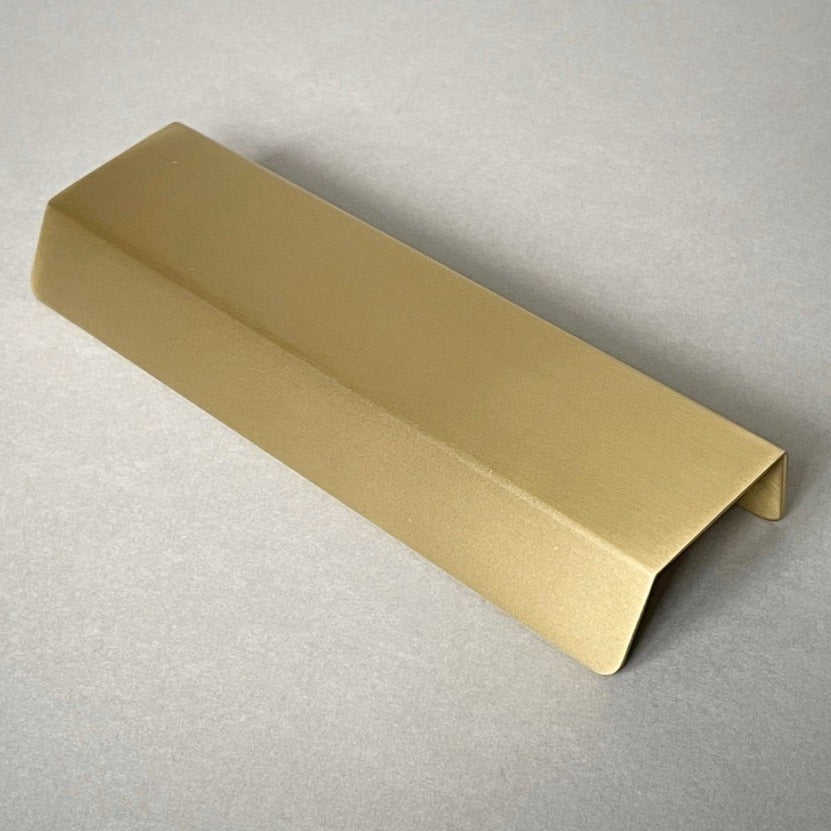
For lip pulls and tab pulls: Lip pulls have two fixing holes on the rear, which means they can be fitted to doors without any pre-existing holes — a useful advantage if you're changing hardware styles. Measure the overall length of the pull when replacing like-for-like, but the two rear fixings give you a clean, secure mount regardless of what was there before. Our INGA Satin Brass Lip Pull and LÄPP Tumbled Brass Lip Pull both use this fixing method.
Choosing the Right Handle Size for New Cabinets
If you're starting fresh — a new kitchen, bathroom renovation, or piece of furniture — you have more freedom. Here's how to choose a size that looks proportional and feels right to use.
Sizing for Cabinet Doors
As a general rule, the handle should span roughly one-third the height of the door. On a standard 715mm tall wall cabinet, 96mm hole centres work well. On a taller larder door or full-height wardrobe, 128mm or longer will look more balanced.
Sizing for Drawers
Drawer handles work best when proportional to the width of the drawer front. A narrow spice drawer suits a knob or compact 64mm pull; a wide pan drawer typically calls for 128mm or longer. For very wide drawers, two handles — one at each end — can look more intentional than one long bar in the centre.
Knobs vs. Handles: Which Suits Which?
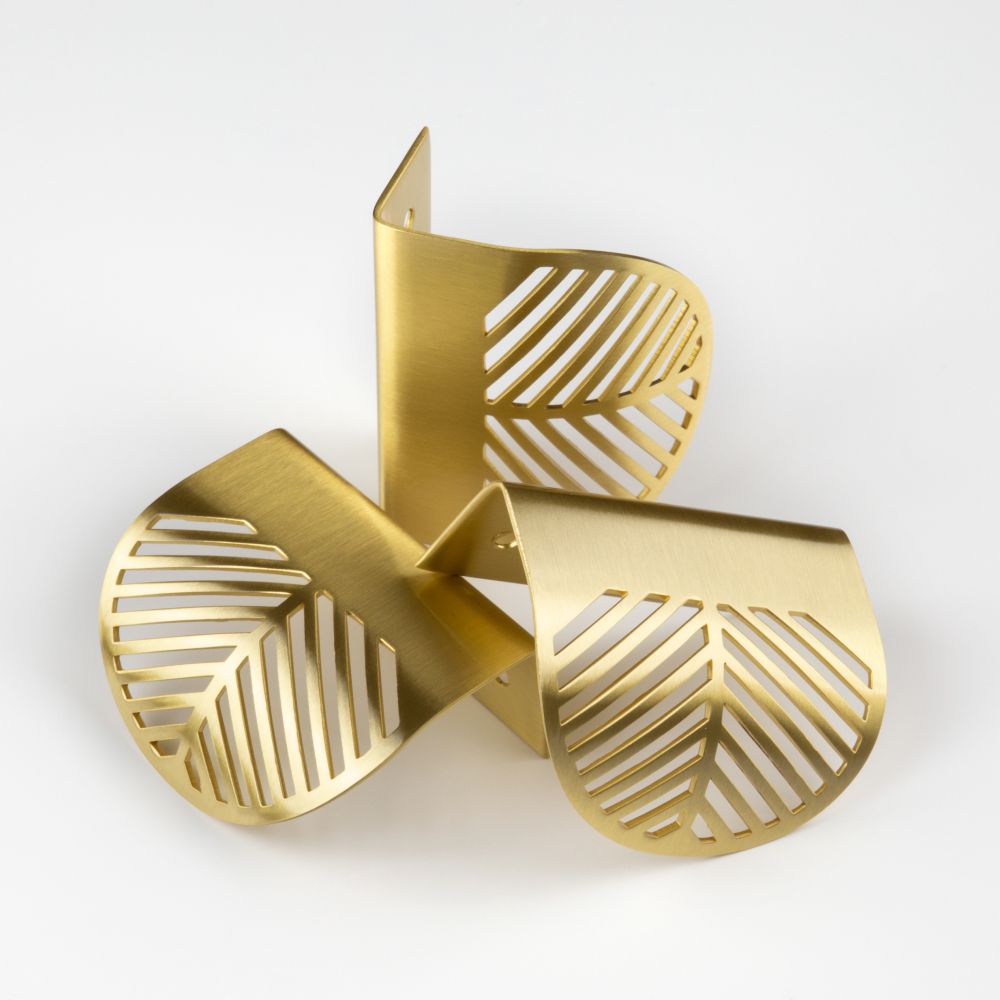
Knobs work particularly well on cabinet doors, where you open with a single-hand pull. They're compact, elegant, and look beautiful in rows across shaker-style cabinetry. Bar handles tend to be more practical for drawers, where you're pulling straight out. Lip pulls and finger pulls are increasingly popular for handleless-style kitchens — our RETT Brass Lip Pull and ASTRID Satin Brass Leaf Pull are worth a look.

Standard Handle Sizes: A Quick Reference
| Hole Centres | Common Application |
|---|---|
| 32mm | Small drawers, jewellery boxes, furniture |
| 64mm | Small to medium drawers, bathroom vanities |
| 96mm | Standard wall cabinet doors, medium drawers |
| 128mm | Large cabinet doors, wide drawers, pantry units |
| 160mm+ | Larder doors, tall wardrobes, pan drawers |
Most of our bar handles are available in 96mm and 128mm — the two sizes that cover the vast majority of kitchen and bathroom cabinets. If you're unsure, 96mm is a safe starting point for most standard kitchen cabinet doors.
How to Drill New Holes Accurately
Mark the position carefully. Use a pencil to mark the centre of where you want the handle to sit. For a vertical handle, mark the centre of the door's width; for a horizontal handle on a drawer, mark the centre of the drawer height.
Use a template. All Barn & Brass handles ship with a drilling template — a card guide that keeps both holes perfectly aligned. Tape it to the door, mark through with a bradawl, and drill.
Drill at slow speed. Cabinet doors are often MDF or veneered wood, which can chip if drilled too fast. Use a sharp 4mm or 5mm wood bit and work slowly.

A Note on Mixing Sizes
It's completely fine — and often looks intentional — to use different sizes across your kitchen. Fit knobs on wall cabinet doors and longer bar handles on base cabinet drawers. The key is keeping the finish consistent: all satin brass, all unlacquered, or all antique — so the overall scheme reads as considered rather than mismatched.
Our TOVE knob pairs beautifully with the BJØRG bar handle — both share a knurled finish, so they belong together without being identical.
Not Sure? Order a Sample First
If you're committing to a full kitchen's worth of hardware, it's always worth ordering a single piece first. Hold it against your cabinet doors, check the weight and feel in your hand, and confirm the finish works with your paint colour and worktop before ordering in quantity.
All our handles are available individually — there's no minimum order, and our 30-day returns policy means you can return anything unused.
Ready to find your size?
Browse the full collection of solid brass cabinet handles, knobs, and pulls — free UK delivery on orders over £75.
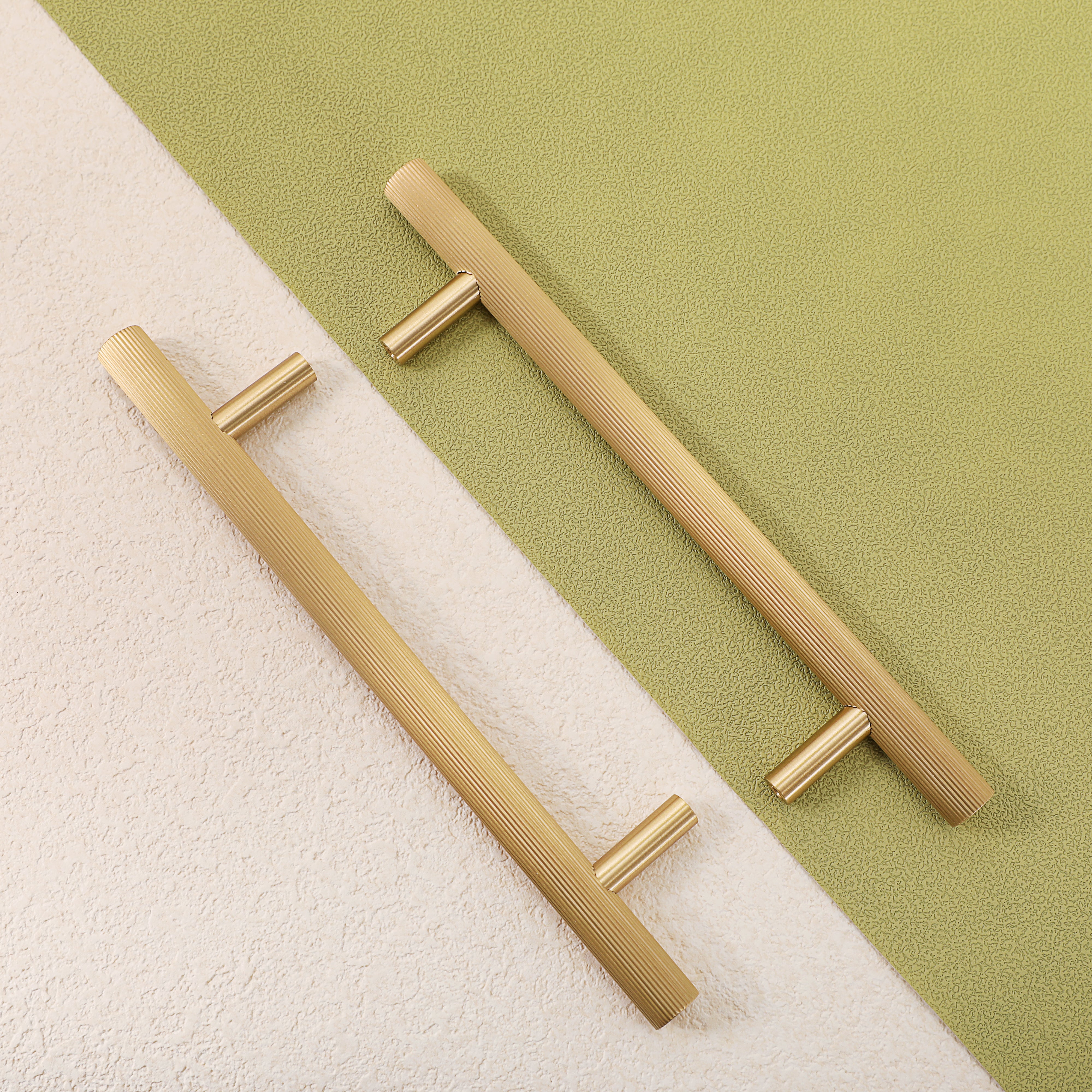
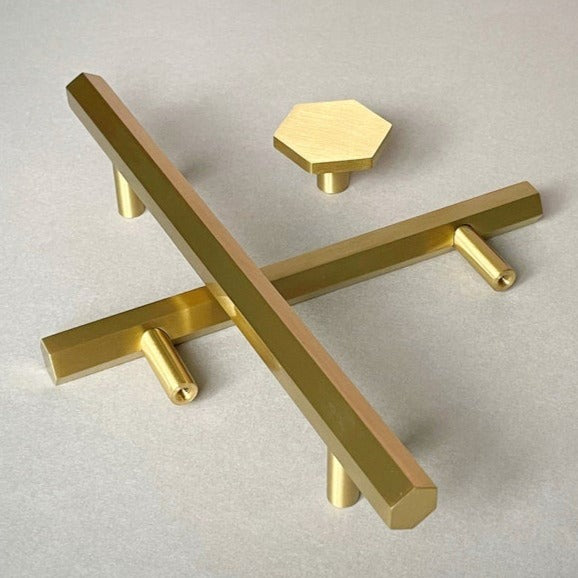
Shop by Size — 96mm Hole Centres
Our most popular size. Works beautifully on standard wall cabinet doors and medium drawers.
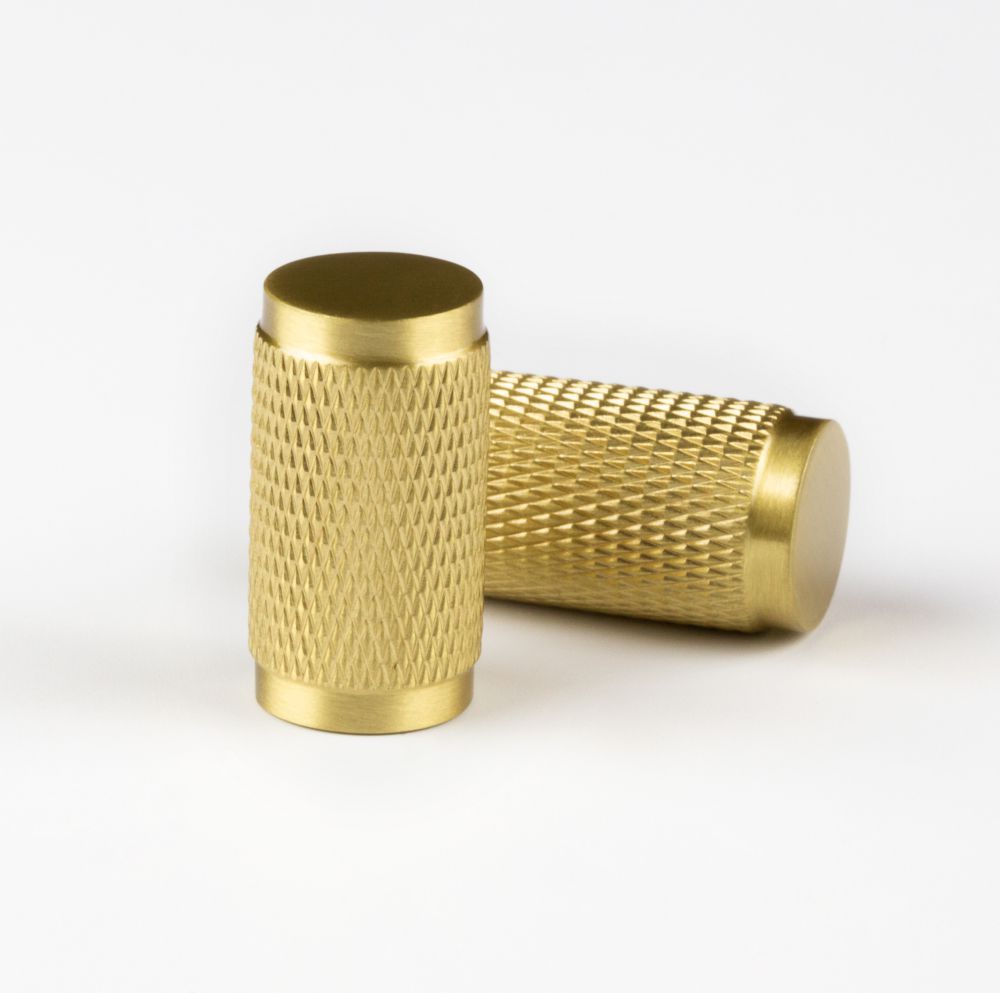
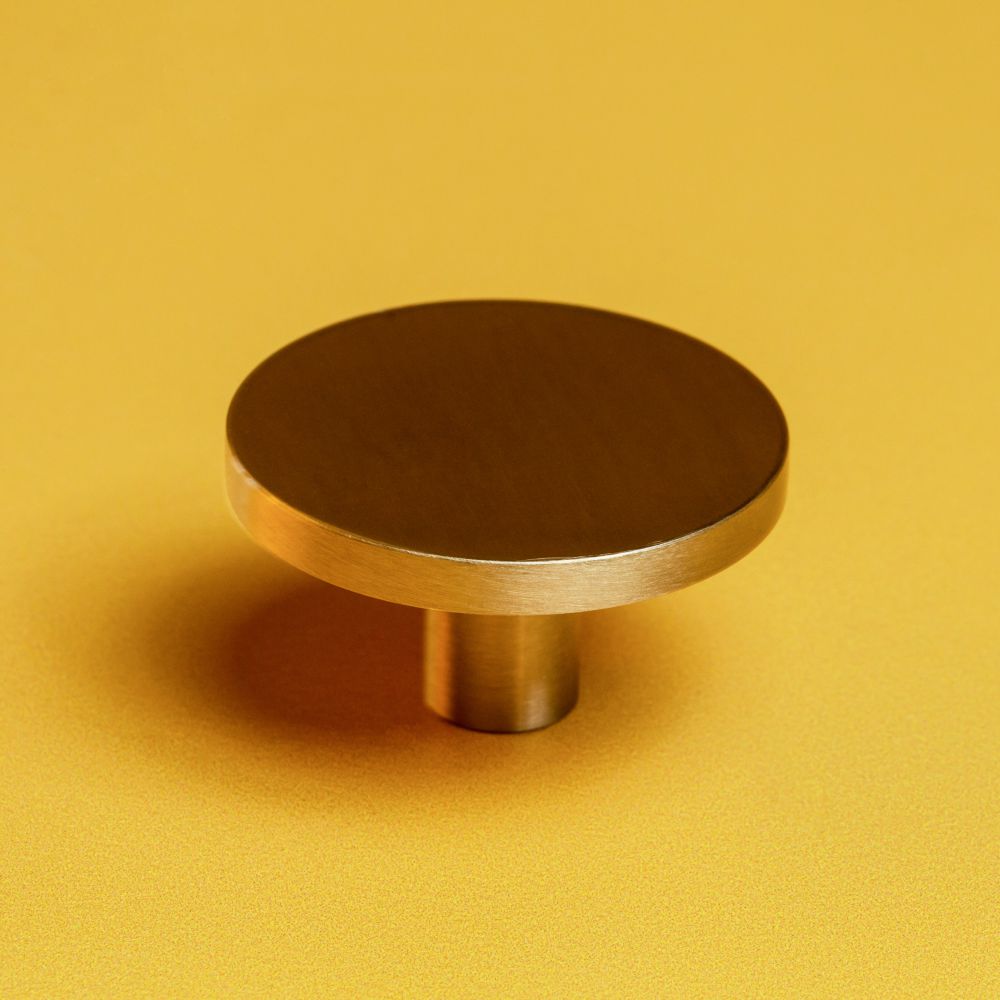
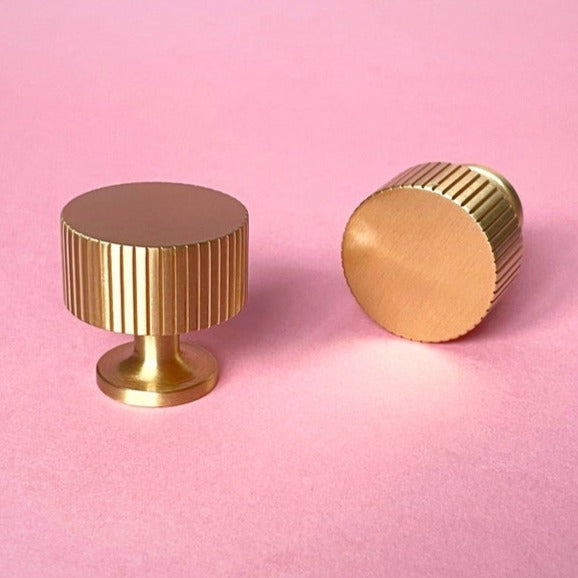
Cabinet Knobs
Single fixing hole. Compact, elegant, and ideal for cabinet doors.
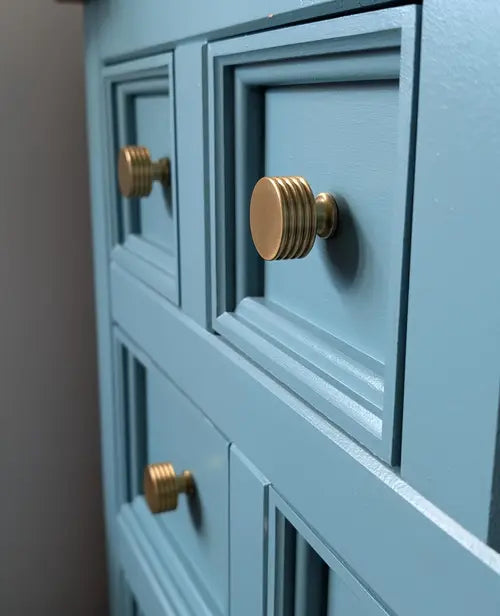
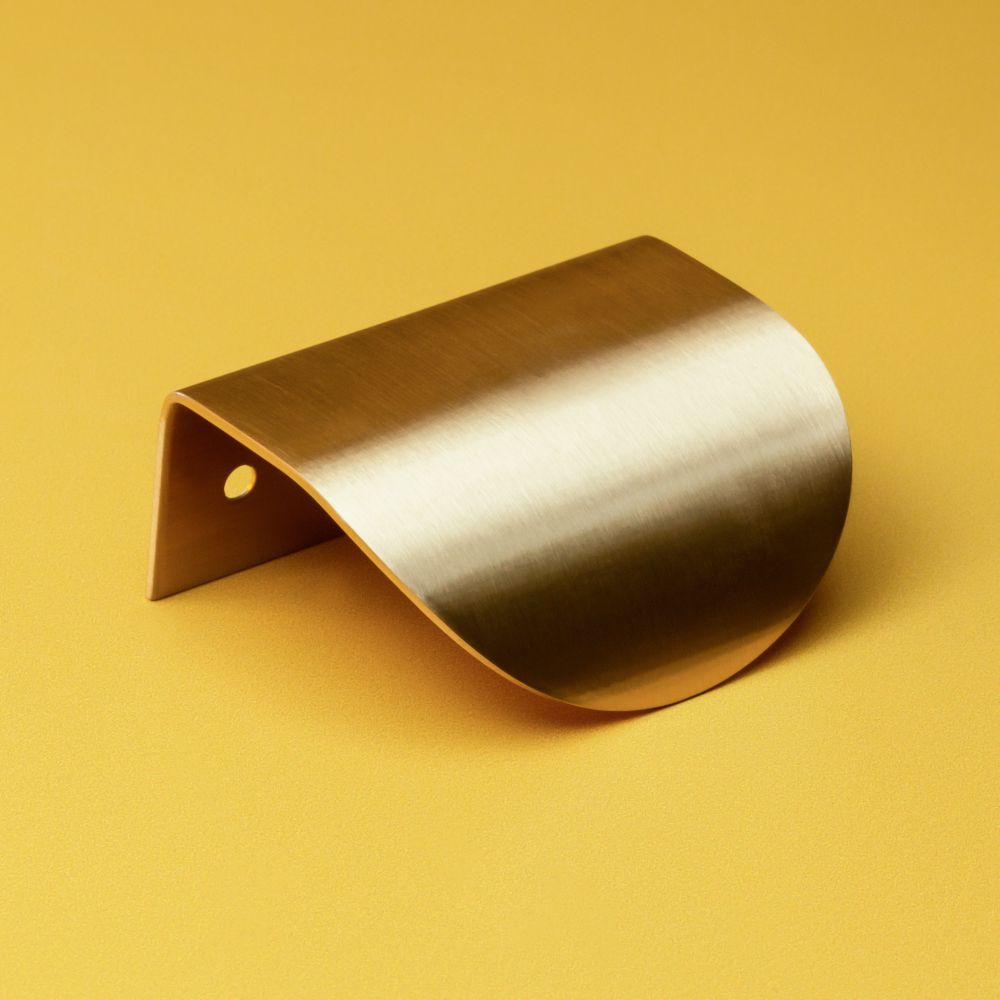
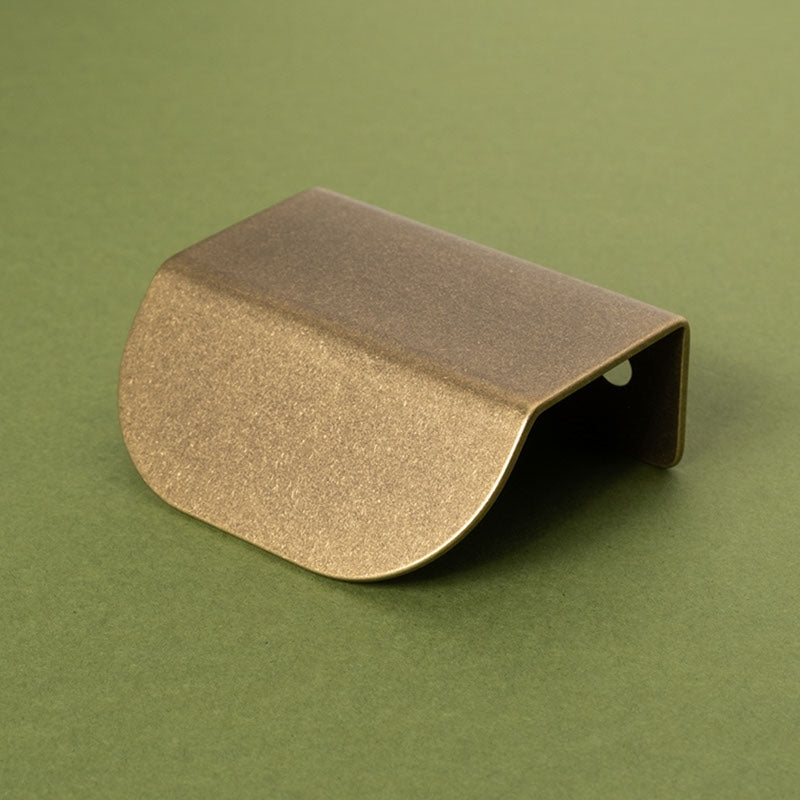
Lip Pulls
Two rear fixing holes — fits to doors without pre-existing holes. Perfect for handleless-style kitchens.
Frequently Asked Questions
96mm and 128mm hole centres are the most widely used sizes for kitchen and bathroom cabinets in the UK. 96mm suits most standard wall cabinet doors and medium drawers; 128mm works better on larger base cabinet drawers and taller doors. If you're unsure, measure your existing handles — most will fall into one of these two sizes.
Hole centres — also written as "centre to centre" — is the distance between the two screw holes on a bar handle, measured from centre to centre. It's the most important measurement when replacing existing handles, as it needs to match your existing holes unless you're happy to drill new ones.
A good rule of thumb is to choose a handle roughly one-third the width of the drawer front. For a standard 500mm drawer, a 128mm to 160mm handle works well. For narrower drawers, 96mm or a single knob is usually the better fit.
Yes — as long as your new handles have the same hole centre distance as your existing ones. Measure the distance between the centres of your current screw holes and match that figure. If the hole centres don't match, you'll need to fill and redrill.
All Barn & Brass hardware uses M4 metric thread — the standard for cabinet hardware in the UK. Every piece ships with fixings in two lengths to suit most standard door and drawer thicknesses (16–22mm), so you won't need to source screws separately.
Yes — all Barn & Brass handles, pulls, and knobs include all fixings you need. Each order also comes with a card drilling template so you can achieve a dead-level row without measuring each position individually.
For wall cabinet doors, handles are typically positioned 50–75mm from the bottom (or nearest opening) edge. For base cabinet drawers, they're usually centred on the drawer front height. These are conventions rather than rules — trust your eye, and use a card template to check before drilling.
You can — though it's more common to do it the other way around (knobs on doors, bar handles on drawers). Whichever combination you choose, keeping the finish consistent across both is the key to a cohesive look.