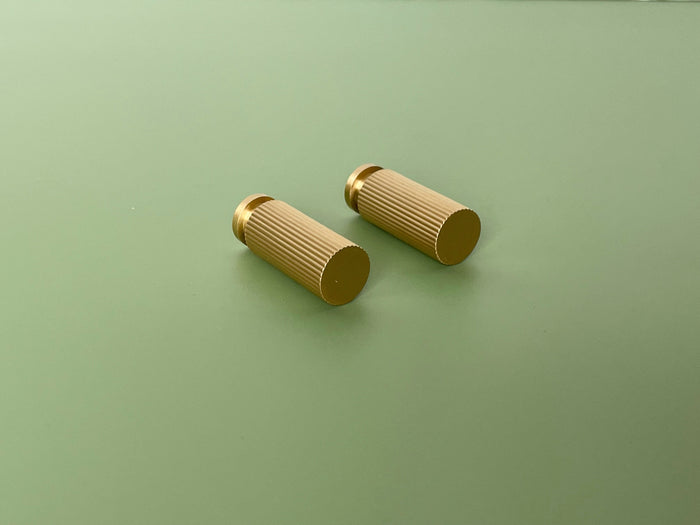
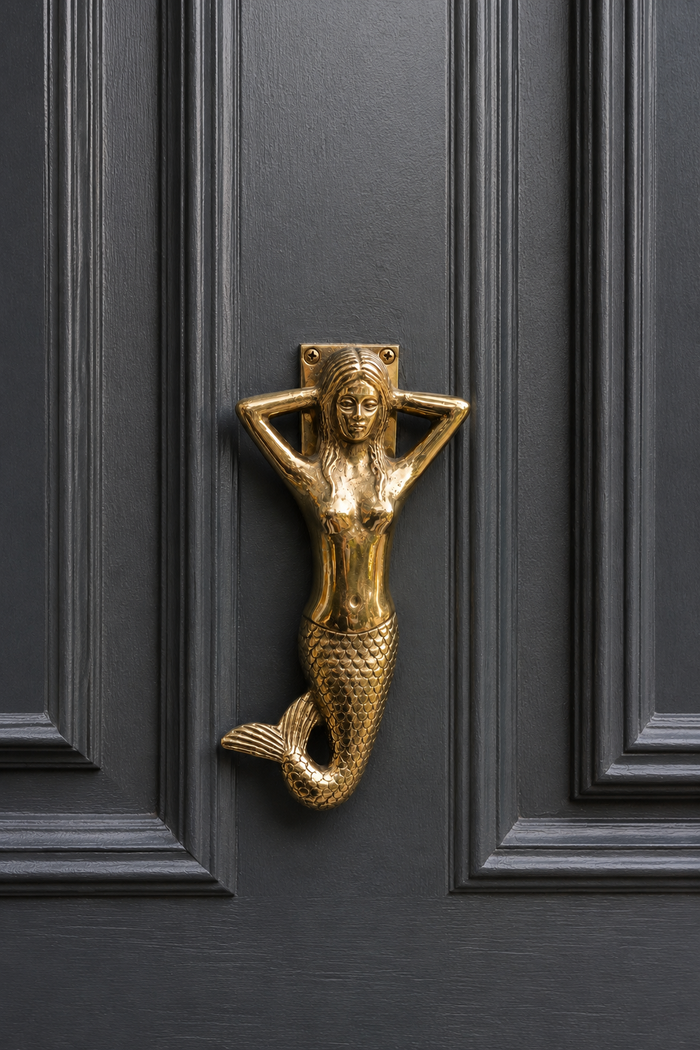
From the satisfying, substantial weight of a solid brass door handle to the intricate, welcoming details of a vintage-inspired door knocker, brass hardware acts as the jewellery of your home. It brings unparalleled elegance, warmth, and lifelong durability to cabinets, doors, and entryways. But have you ever wondered how raw, fiery metal is transformed into the stunning hardware you interact with every day?
At Barn and Brass, we believe that understanding the craftsmanship behind your hardware deepens your appreciation for it. The journey from raw ingot to a gleaming cabinet knob is a fascinating blend of ancient artistry and modern engineering.
Here is an in-depth, behind-the-scenes look at the manufacturing techniques used to create brass cabinet knobs, handles, doorbell buttons, and door knockers—and why we choose to craft our pieces the way we do.
1. The Soul of Barn and Brass: Traditional Sand Casting
While there are many ways to shape metal, sand casting remains the beating heart of our production for larger, character-rich pieces like traditional door knockers and rustic pulls. It is one of the oldest metalworking techniques in human history, and we love it because it imparts an undeniable soul into the metal.
How Sand Casting Works
The process is intensely physical and rooted in elemental craftsmanship:
- The Pattern: A master model (the pattern) of the hardware is pressed into a specialized, tightly bound sand mixture inside a two-part box called a flask.
- The Mold: When the pattern is carefully removed, it leaves behind a perfect negative cavity in the sand.
- The Pour: Solid brass ingots are superheated in a crucible to over 1,600°F (about 900°C) until molten. This glowing liquid metal is then poured by hand into the sand cavity.
- The Breakout: Once the brass cools and solidifies, the sand mold is broken apart to reveal the raw hardware.
Because the sand mold must be destroyed to remove the cooled brass, every single piece we cast is technically a one-of-a-kind original.
- Best for: Large, heavy pieces with a rustic, authentic, or textured finish, such as heavy door knockers and oversized pull handles.
- The Pros: It allows for massive, beautifully weighty designs. It gives pieces a charming, slightly textured, authentic vintage feel that mass-produced items simply cannot replicate.
- The Cons: It requires intensive manual labor and lacks microscopic dimensional accuracy—which is why we follow it up with our rigorous hand-polishing process.
2. The Art of Hand Polishing: Making Every Piece Unique
When a piece of hardware emerges from a sand mold, it is rough, oxidized, and dull. The true beauty of Barn and Brass hardware is coaxed out at the polishing wheel.
We deliberately choose hand polishing over automated, robotic tumbling. Our artisans take each raw casting and press it against a series of spinning cotton wheels loaded with varying grits of polishing compounds.
- The Human Touch: The artisan must use their eye and touch to know exactly how much pressure to apply and for how long. They smooth out the rough edges while intentionally preserving the subtle, organic textures created by the sand casting.
- Perfect Imperfection: Because this is done by a human hand, the pressure varies slightly from piece to piece. This means no two door knockers or pulls are mathematically identical. They carry the subtle hallmarks of the craftsman, making your hardware truly bespoke.
3. Precision Where It Matters: CNC Milling
While we love the organic, artisanal nature of sand casting for large statement pieces, certain items require flawless symmetry and exact tolerances. For our cabinet knobs and handles, we predominantly rely on CNC (Computer Numerical Control) Milling.
How CNC Milling Works
Instead of melting the brass, CNC machining starts with a solid, extruded block or rod of solid brass—often referred to as a billet.
- Programming: A digital 3D model of the knob or handle is fed into a computer.
- Carving: Automated, highly precise cutting tools carve away the excess brass from the solid block at incredibly high speeds.
- Threading: The machine drills and taps the screw holes with microscopic precision so that your installation is perfectly smooth.
- Best for: Precision parts requiring exact symmetry, sharp geometric lines, internal mechanics, and perfect screw threading—like cabinet knobs, drawer pulls, and doorbell buttons.
- The Pros: Flawless precision; incredible material strength (as the brass is cut from a dense, solid billet); allows for crisp, modern edges and perfect mechanical fits.
- The Cons: It generates brass shavings (which we carefully collect and melt back down to be recycled into new castings). It is also a slower process per piece compared to mass stamping.
4. Other Casting Techniques in the Industry
While sand casting and CNC milling are the cornerstones of Barn and Brass, it helps to understand other industry methods to see the full picture.
Investment Casting (Lost-Wax Casting)
This ancient technique involves creating a wax replica of the hardware, coating it in a ceramic shell, and then melting the wax away in a kiln (the "lost wax"). Molten brass is poured into the empty ceramic shell.
- Pros: Exceptional detail for highly ornate, sculptural pieces; produces an incredibly smooth surface straight out of the mold.
- Cons: Very expensive and time-consuming, usually reserved for highly intricate, decorative backplates.
Die Casting (The Mass Production Route)
In die casting, molten brass (or more commonly, cheaper zinc) is forced under high pressure into a reusable steel mold (a die).
- Pros: Extremely fast production; high dimensional accuracy.
- Cons: This is the hallmark of mass-produced hardware. It requires high initial tooling costs, lacks the "soul" of handcrafted items, and is rarely used by artisanal makers.
5. The Strength of Forging Brass
Forging is another popular method for high-end hardware, particularly for items subjected to heavy daily force. Forging does not melt the brass; it uses extreme pressure to shape it.
Hot Forging
A solid rod of brass is heated until it becomes glowing and pliable (but not liquid). It is then smashed between two halves of a heavy steel die under thousands of pounds of pressure.
- Best for: Hardware that requires immense structural strength, like lever-style door handles and locking mechanisms.
- Pros: Eliminates microscopic air pockets found in cast brass, creating a dense, virtually indestructible piece with a buttery-smooth surface.
Cold Forging
This shapes the brass at room temperature using extreme mechanical force. It is often used to create the heavy brass blanks that are subsequently refined by CNC machines.
Comparing the Methods: A Quick Reference
| Manufacturing Method | The Process | Barn & Brass Use Case | Distinctive Vibe |
|---|---|---|---|
| Sand Casting | Molten brass poured into sand molds. | Door knockers, large rustic pulls. | Authentic, substantial, slightly textured, vintage. |
| CNC Milling | Carved from a solid brass block by precision tools. | Cabinet knobs, handles, doorbell buttons. | Flawless, geometric, mechanically precise. |
| Hand Polishing | Artisanal smoothing using polishing wheels. | Applied to sand-cast pieces. | Unique to each piece; highlights human craftsmanship. |
| Investment Casting | Wax models replaced by brass in ceramic molds. | Highly ornate, sculptural backplates. | Intricate, microscopic detailing. |
| Hot Forging | Heated brass smashed under extreme pressure. | High-traffic levers and handles. | Incredibly dense, smooth, and indestructible. |
Common Misconceptions About Brass Hardware
Misconception 1: "Machine-made hardware is always superior."
Reality: It depends on the application. While CNC machines provide necessary precision for cabinet knobs and threading, automated mass-production strips away the character of the metal. Hand-polished, sand-cast brass possesses a warmth and individuality that machines cannot replicate.
Misconception 2: "If it tarnishes, it must be cheap brass."
Reality: The exact opposite is true! Solid, unlacquered brass will tarnish, darken, and develop a rich patina over time. In the industry, we call this a "living finish." It is the ultimate hallmark of high-quality, authentic solid brass. Cheaper metals remain shiny because they are heavily coated in synthetic, plastic-like lacquers.
Misconception 3: "Heavy hardware means it was forged."
Reality: Weight does not dictate the method. A solid sand-cast door knocker can easily outweigh a hot-forged lever handle. The difference lies in the microscopic density and surface smoothness, not just the sheer weight in your hand.
Frequently Asked Questions (FAQs)
Q: Can I mix sand-cast hardware with CNC-milled hardware in the same room?
A: Absolutely. In fact, many designers prefer it. Using precision CNC-milled knobs on your cabinets alongside a hefty, sand-cast pull on a pantry door creates a layered, custom look. As long as the finish (e.g., unlacquered, polished, or antique) belongs to the same family, the pieces will complement each other beautifully.
Q: Why do my Barn and Brass sand-cast pulls look slightly different from one another?
A: That is the beauty of our process! Because every sand mold is made by hand and destroyed after one use, and because each piece is polished by a human artisan rather than a robot, slight variations in texture and finish are natural. These are not defects; they are the signatures of authentic craftsmanship.
Q: How do I maintain hand-polished brass?
A: If you chose an unlacquered living finish and want to keep it bright and shiny, an occasional rub with a quality brass polish (like Brasso or Barkeepers Friend) and a soft microfiber cloth will restore its original gleam. If you prefer the aged, antique patina, simply do nothing! Let the natural oils from your hands and the environment do the work over time.
Q: Is solid brass hardware better than "brass-plated" hardware?
A: Without a doubt. Zinc or aluminum hardware that is merely "brass plated" is a temporary illusion. The thin plating will eventually chip, peel, and reveal the gray metal underneath. Solid brass is the same beautiful metal all the way through to its core, meaning it can be polished and restored century after century.